




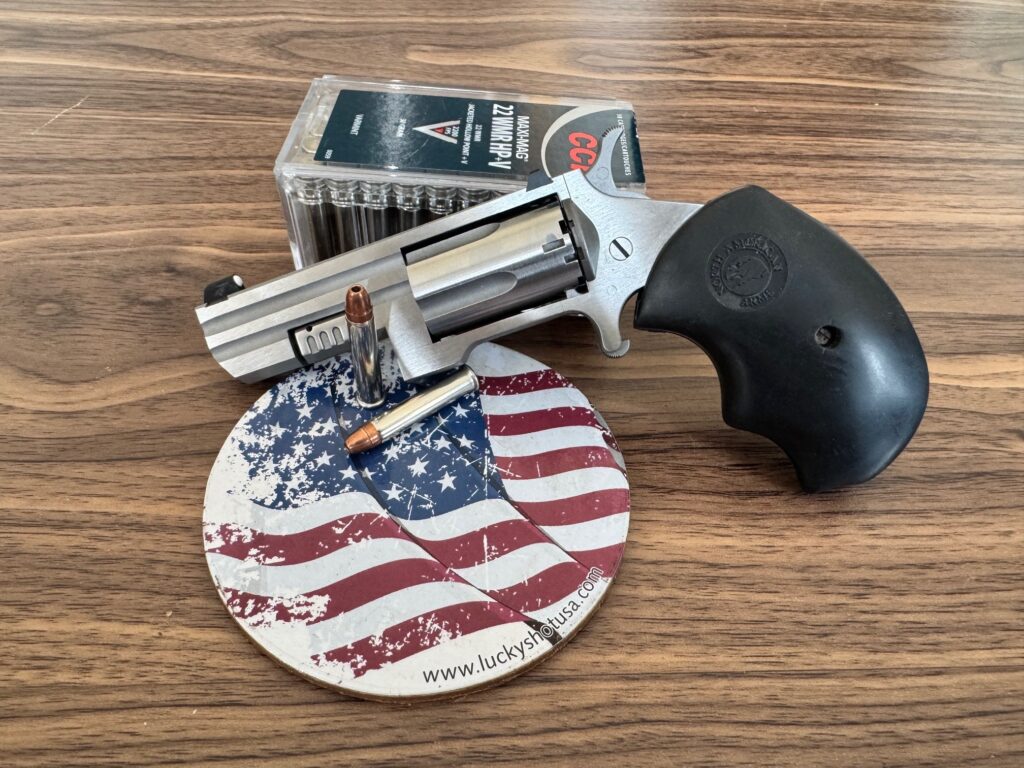
There’s something undeniably appealing about small, easily concealed handguns. From riverboat gamblers to lawmen of the Old West, compact firearms have long played a role in personal defense. The North American Arms (NAA) Recluse in .22 Magnum carries that legacy forward—blending the classic derringer concept with a modern revolver design that makes it especially appealing as a backup weapon.
A Brief History of Derringer-Style Handguns
The derringer traces its roots back to Henry Deringer in the early 1800s. His small, single-shot pistols were easy to conceal and surprisingly effective at close range. Over time, “derringer” became a catch-all term for compact, pocket-sized firearms.
In the Old West, these guns were often a last line of defense. Gamblers tucked them into sleeves, women carried them discreetly, and even seasoned gunfighters relied on them as backup options. While they were limited in capacity, their concealability made them invaluable.
As firearms evolved, so did derringers—most notably into two-shot designs like the Remington Model 95. But the core idea never changed: small, simple, and ready when needed most.
NAA Recluse: A Derringer Concept Reinvented
North American Arms took that traditional concept and gave it a modern upgrade. Instead of a two-shot derringer, the Recluse is a five-shot mini-revolver, maintaining the compact size while increasing capacity and reliability.
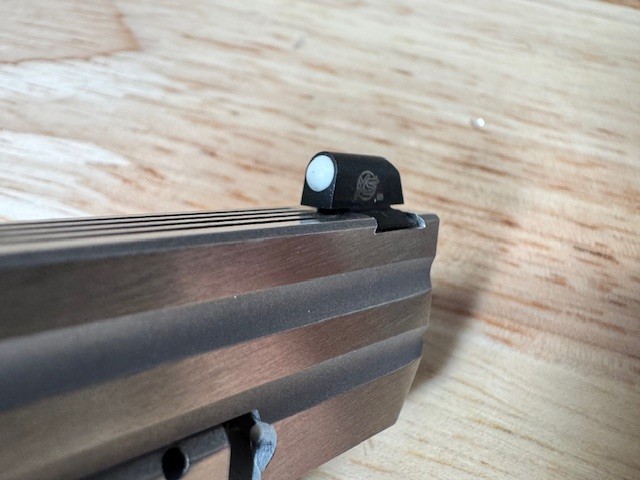
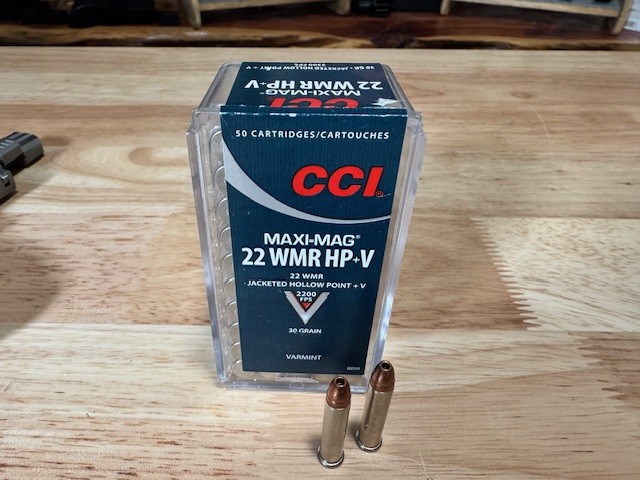
Chambered in .22 Magnum (WMR), the Recluse offers more punch than you might expect from something this small. Its shrouded and ported barrel system helps manage recoil and muzzle rise, which is a thoughtful touch in a firearm of this size.
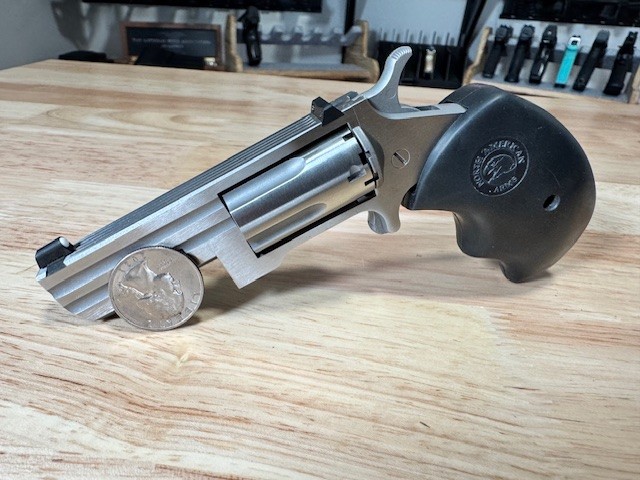
This isn’t just a novelty—it’s a practical evolution of a time-tested defensive concept.
Range Performance: Built for Close Encounters
On the range, the Recluse delivered exactly what you want from a defensive revolver: consistent reliability. It fired every time without issue—something that’s especially important in a backup firearm.
Testing was done at 10 feet, aiming center mass. At that distance, I was able to consistently land every round where it needed to go. That’s really the key here—this gun is designed for close-range defense, not precision shooting.
You’re not going to get tight groups at distance, and that’s okay. With a mini-revolver like this, the expectation is simple:
Can you hit your target quickly and reliably at defensive distances?
The answer here is yes.
Handling & Recoil
Being chambered in .22 Magnum, the Recluse has a bit more snap than its .22 LR counterparts. For such a small handgun, you’ll definitely feel it—but it’s manageable with a little practice.
One of the standout features is the oversized grip. Unlike the smaller birdshead grips found on traditional NAA mini-revolvers, the Recluse’s grip gives you:
- Better control
- A more secure hold
- Improved recoil management
This makes a noticeable difference, especially during follow-up shots. It still takes some getting used to, but it’s far more user-friendly than many ultra-compact options.
Carry & Concealment: Where It Shines
The Recluse truly shines when it comes to deep concealment and backup carry.
Its compact size makes it easy to carry in:
- A pocket holster
- An ankle rig
- A vest or jacket pocket
- As a secondary firearm alongside a primary carry gun
Because of its simplicity and reliability, it’s an excellent choice for a backup gun (BUG)—something you can depend on if your primary firearm is inaccessible or malfunctions.
Things to Consider:
- You’re working with five rounds, so shot placement matters
- Reloading is slower than with semi-autos
- The small size requires practice for confident handling
But these trade-offs are exactly what you expect in a firearm designed for last-resort defense.
